
Why Won’t My Lower Denture Stay in Place?
December 18, 2025
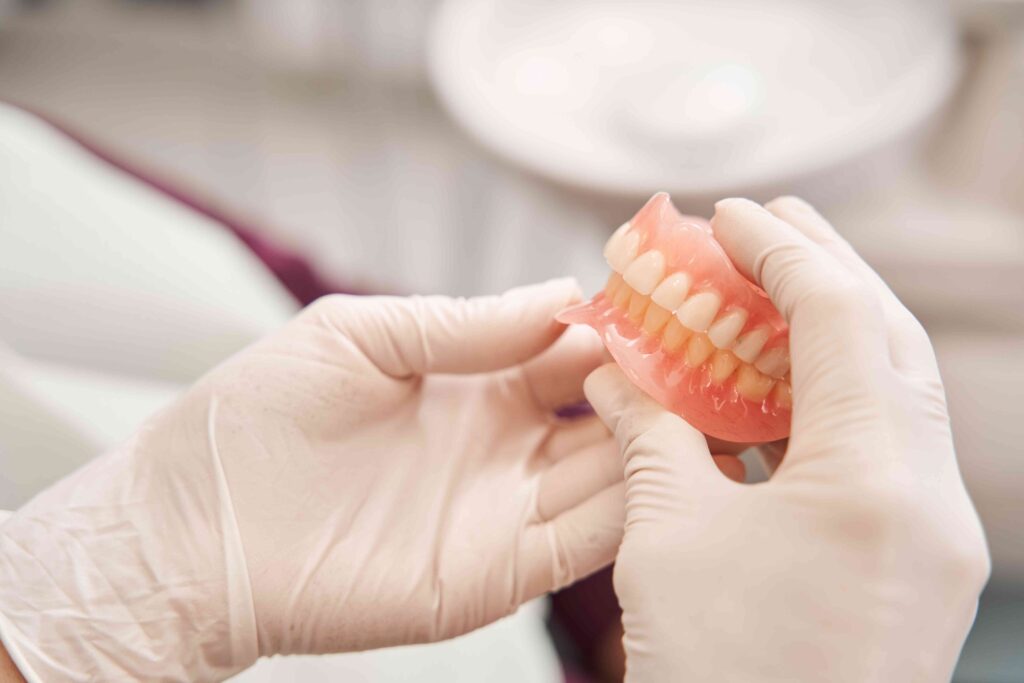
Dentures are a lifechanging tooth replacement option or those who have suffered from extensive tooth loss. They can help you chew your food, speak clearly, and feel confident with your smile. These prosthetics are customized for a perfect fit. However, if your denture keeps shifting out of place, it can be frustrating. Patients tend to experience this issue more often with lower dentures than upper ones. Continue reading to learn why dentures become unstable and what you can do about it.
Why Is My Lower Denture Unstable?
There are several different issues that could result in lower dentures becoming unstable. Here are some of the most common ones.
- Flat/Negative Ridge: If you have adequate bone height and width, your lower denture is much more likely to remain stationary. This is especially the case if your lower ridge is U-shaped. However, if you haven’t had teeth for many years or you have a flatter bone, the lower denture has a more difficult time staying in place.
- Inadequate Denture Border Length: The side of the denture are called “borders.” They need to stay suctioned to the gums. If you don’t have enough saliva, or your saliva is too thick, you could run into some issues.
- Lack of Saliva: A major factor in denture retention is saliva. Saliva helps the denture to remain suctioned to the gums. If you don’t have enough saliva, or your saliva is too thick, you could run into some trouble.
- Impatience: Wearing dentures takes some time to adjust to. You won’t be an expert right away, but by taking the time to adapt to them and their function, you are more likely to have success.
3 Ways to Improve the Stability of Bottom Dentures
- Reline: Relines are necessary on occasion so the base of your denture can adapt to your ridge anatomy. The mouth is always changing, so your dentures need to be reshaped every few years.
- Denture Adhesive: Using a small amount of denture adhesive can help to keep your prosthetic in place. Just remember that with this type of product, more isn’t always better. If your dentures aren’t stationary with minimal adhesive, you may need a reline.
- Practice: Time and patience are necessary when you get dentures. It is important to train the muscles of your face and tongue to get used to the denture. Make sure to train the muscles in your face and tongue to get used to the denture. You should also chew on both sides of your mouth evenly to avoid excessive pressure on one side. You may also want to try resting your tongue in a different position in your mouth to avoid dislodging your denture.
If your denture isn’t staying in place like it used to, let your dentist know. Adjustments can be made to help your replacement teeth fit comfortably in your mouth.
About the Author
Dr. Jeffrey F. Hermen earned his Doctor of Dental Surgery from The OU College of Dentistry. Since then, he has been committed to continuing education to keep his knowledge as skills sharp. Currently, he is a proud member of the Oklahoma Dental Association and has served on the board for the Oklahoma County Dental Society for over 20 years! For more information or to schedule an appointment, visit his website or call (405) 621-2100.
No Comments
No comments yet.
RSS feed for comments on this post.
Sorry, the comment form is closed at this time.